




A Modern Fundraising Guide for Youth Camps: 5 Strategies to Grow, Engage, and Inspire Your Donor Community

Modern Fundraising Strategies for Camps on a light blue background with blue shapes and a picture of hands inside a circle.
November 12, 2025
7 minutes
This article is part of a series
Keep learning with related articles.
Soon..

Youth camps are uniquely equipped to create life-changing moments. Whether it’s summer camp programming, outdoor adventure, or faith formation, camps shape identity in a way few environments can. And because your mission is transformational, your fundraising efforts should be too.

Funraise CEO and Co-founder Justin Wheeler has five practical strategy sessions to help camps strengthen donor relationships, diversify revenue, and embrace digital fundraising for camps with confidence. This guide brings those sessions together, along with the full slide decks, so camp leaders can revisit the concepts, learn at their own pace, and begin implementing new strategies immediately.

These aren’t abstract theories, they’re realistic, achievable approaches for small development teams, executive directors, and camp staff who may not feel comfortable with youth camp fundraising strategies yet… but know it’s essential to sustaining their mission.

Practical Strategies to Grow Your Donor Base

Get all the information in Justin's Practical Strategies to Grow Your Donor Base slide deck.

Get the Donor Growth Plan Worksheet for Camp Fundraisers!

Fundraising environments have shifted dramatically over the past decade. While overall giving remains steady, the number of donors participating has declined. Giving USA and M+R Benchmarks both point to the same trend: fewer donors are giving more. That means camps can no longer rely on broad, one-size-fits-all donor growth strategies. Instead, they need high-trust, community-driven pathways to find and engage new supporters.

Why donor growth is harder—and more important—than ever

Families, alumni, volunteers, and church communities care deeply about your mission, but many camps aren’t tapping into those networks intentionally. Traditional methods like direct mail or mass email acquisition can feel like shouting into the wind for small teams. What works now is rooted in relationships, not reach.

That’s why modern donor growth strategies prioritize trust, authenticity, and social connection.

Peer-to-peer fundraising as a growth engine

Peer-to-peer (P2P) fundraising allows your supporters to raise funds through their own networks. Instead of asking strangers to give, you’re empowering people who already believe in your mission to share it. Relational fundraising consistently outperforms cold outreach because trust—not strategy—does the heavy lifting.

Peer-to-peer fundraising works especially well for camps because:

  • Your alumni and families want to share their experiences
  • It gives people a simple way to support you, even if they can’t give large gifts
  • It introduces new donors who already feel personally connected

Incentives that motivate participation

Small rewards—T-shirts, badges, digital recognition, early registration perks—aren’t bribes. They tap into intrinsic motivations like belonging and accomplishment. Camps understand these dynamics naturally; applying them to fundraising increases donor engagement without increasing staff effort.

Giving Days as donor accelerators

Giving Day strategies work because:

  • They create a sense of urgency
  • They align your entire community around a shared moment
  • They energize donors who otherwise give sporadically

Giving Days pair especially well with P2P campaigns and thematic storytelling.

What camps can expect when applying these strategies

Camps that commit to trust-based donor growth typically see:

  • a broader, more diverse donor pipeline
  • reactivation of lapsed supporters
  • higher engagement from families and alumni
  • less strain on development staff to “go find donors” manually

Start Here: Practical First Steps

  • Identify three supporters who would be great P2P fundraisers.
  • Choose one upcoming moment (summer kickoff, reunion weekend, etc.) to anchor a Giving Day.
  • Add one simple incentive (shirt, sticker, early access) to your next campaign.

Maximizing Giving From Existing Donors

Discover more strategies to apply to your donor data base in the Maximizing Giving From Existing Donors slide deck.

While expanding your donor base matters, long-term sustainability comes from the donors you already have. In fact, industry studies consistently show that existing donors account for the majority of year-over-year revenue growth. That means increasing donor value isn’t about pressuring people, it’s about unlocking the potential already in your community.

This session explains how summer camps can steward donors more intentionally so generosity grows naturally and sustainably.

Discovering the hidden potential in your donor file

Many donors give small amounts at first, not because they lack capacity, but because they’re establishing trust. With consistent engagement, these donors often upgrade significantly. Camps frequently miss these opportunities because they rely solely on giving history instead of exploring deeper indicators.

Wealth screening helps surface public data—such as real estate holdings or philanthropic history—that can reveal untapped capacity.

Engagement as the strongest predictor of giving

Behavior often tells you more than bank accounts. Donors who interact with your emails, attend annual events, follow you on social media, or maintain long-term recurring gifts are demonstrating emotional investment. (Maybe they do all these things! Dream donor...)

These behaviors are signals—not just data points—that a donor may be ready for a deeper relationship.

Asset-based giving: the overlooked opportunity

Because 90% of U.S. wealth is held in assets rather than cash, stock gifts and donor-advised funds (DAFs) often produce significantly larger contributions.

Learn about DAFs. Learn about stock giving.

Identity-based donor engagement

Summer camps are identity-shaping environments. Donors give not just to support programs, but to reinforce personal values: faith, formation, leadership, and community support. When your Christian camp fundraising connects their identity to tangible outcomes, it deepens trust and accelerates giving. Need a little support? Try these fundraising strategies for faith-based nonprofits.

What camps can expect

With a renewed focus on donor stewardship strategies, camps often see:

  • upgraded recurring gifts
  • increased mid-level and major gifts
  • more meaningful donor relationships
  • stronger financial predictability

Start Here: Practical First Steps

  • Identify five donors who consistently engage (open emails, attend events).
  • Send each one a personalized note or call acknowledging their involvement.
  • Add DAF and stock-giving instructions to your donation page.

Leveraging Technology to Supercharge Fundraising

We've got even more ways to Leverage Technology to Supercharge Fundraising in the slide deck!

Most development teams at camps are small. Some are a team of one, so technology should reduce stress, not add it. Modern fundraising tools exist to automate repetitive tasks, simplify giving, and surface donor insights that help you build real relationships.

This session demonstrates how digital systems multiply capacity and free staff to focus on the mission.

Reducing friction in the giving experience

Every additional step in the giving process—extra clicks, extra fields, unclear buttons—loses donors. M+R Benchmarks show that streamlined, mobile-friendly giving pages dramatically increase conversion rates.

Reducing friction is about respecting donors’ time and making generosity easy.

Automation as a strategic advantage

Even basic automations, like recurring gift prompts, welcome sequences, donor journeys, and automated receipts, give small teams hours back each week. That reclaimed time becomes capacity for real donor engagement, program development, or strategic planning.

Save even more time: Read on to find out how fundraising automation saves nonprofit teams time.

Data that shows you where to focus

Online giving tools don’t just store donor information, they reveal patterns. For example:

  • who is likely to lapse
  • which emails spark engagement
  • which donors might upgrade
  • which camp experiences drive the most connection

These insights help camps stop guessing and start leading with clarity.

What camps can expect

After modernizing their nonprofit fundraising technology stack, camps typically see:

  • higher donation conversion rates
  • increased recurring giving
  • more informed donor conversations
  • fewer administrative tasks pulling them away from mission-critical work

Start Here: Practical First Steps

  • Review your donation page for unnecessary steps.
  • Automate one communication sequence (thank-you emails, new donor welcome, etc.).
  • Identify one data insight you can act on this month.

Mobilizing Teens for Good: Lessons From Invisible Children

Learn from a real-life teen sensation: the Mobilizing Teens for Good slide deck with examples from Invisible Children.

Camps work with teens daily. Y'all see firsthand how much passion, creativity, and leadership potential young people hold. This session explores how Invisible Children mobilized one of the largest youth-driven social movements in nonprofit history—and what camps can learn from that experience.

Why teens are powerful mission carriers

Teens are natural amplifiers. They rally their peers, share compelling content instinctively, and engage wholeheartedly when a cause feels personal. They also crave belonging—something camps provide by design.

For camps, teens represent The Future: future donors, future volunteers, future staff, and future ambassadors. Investing in teen involvement today plants the seeds of tomorrow’s donor pipeline.

The four-part framework for youth mobilization

  1. Story: raw, honest storytelling teens trust
  2. Mission: clear injustice or need they can feel
  3. Method: accessible, low-barrier entry points
  4. Ownership: authentic leadership opportunities, not token involvement

When these four elements align, teens don’t just participate; they lead.

Creating simple on-ramps

Teens don’t need fancy, grandiose roles—they need real ones. Camps can turn teen participants into partners by getting them on board through teen-led P2P campaigns, micro-volunteering tasks, small leadership squads, and creative missions tied to camp values. Then you've got pretty much everything teens love.

What camps can expect

Camps that empower teens often experience:

  • renewed alumni enthusiasm
  • increased P2P participation
  • stronger family engagement
  • a sustainable, generational donor pipeline

Start Here: Practical First Steps

  • Invite two teens to co-create a small fundraising idea.
  • Start a teen-led P2P challenge tied to a camp value.
  • Add one teen leadership role to your next event.

Make Your Fun Run More Fun (and More Effective)

Don't we all want to Make Your Fun Run More Fun? Find the facts, tips, and tricks on the slide deck.

Most camps run events—especially fun runs—to build community support, visibility, and revenue. But events can also drain staff capacity, especially when the focus lands solely on logistics. Here's how you can reframe events as experiences, not tasks.

Why events often feel exhausting

Sometimes it's hard to see the entire scope, but small teams carry the full weight of planning, logistics, communication, turnout, fundraising goals, and more for all fundraising events for camps, and it can be overwhelming! But when the event's purpose gets lost in the stress, the experience falls flat for both participants and organizers.

Designing events with experience in mind

Events become transformative when they:

  • connect participants to the mission
  • celebrate community support
  • include small joyful elements
  • give youth a role in the energy
  • create moments people want to share

These aren’t expensive additions—they’re intentional ones.

The power of pre-event momentum

Engagement builds before participants ever arrive. Early communication, P2P fundraising challenges, social prompts, and mini-goals raise energy and motivation, leading to higher turnout and more generous giving (exactly what you wanted!)

What camps can expect

When events are built around experience rather than logistics:

  • participation rises
  • giving per participant increases
  • community support and visibility grows
  • staff morale improves

Start Here: Practical First Steps

  • Add one joyful “surprise element” to your next event. (It doesn't have to be big!)
  • Launch pre-event communication 3–4 weeks earlier.
  • Introduce team-based P2P fundraising for participants.
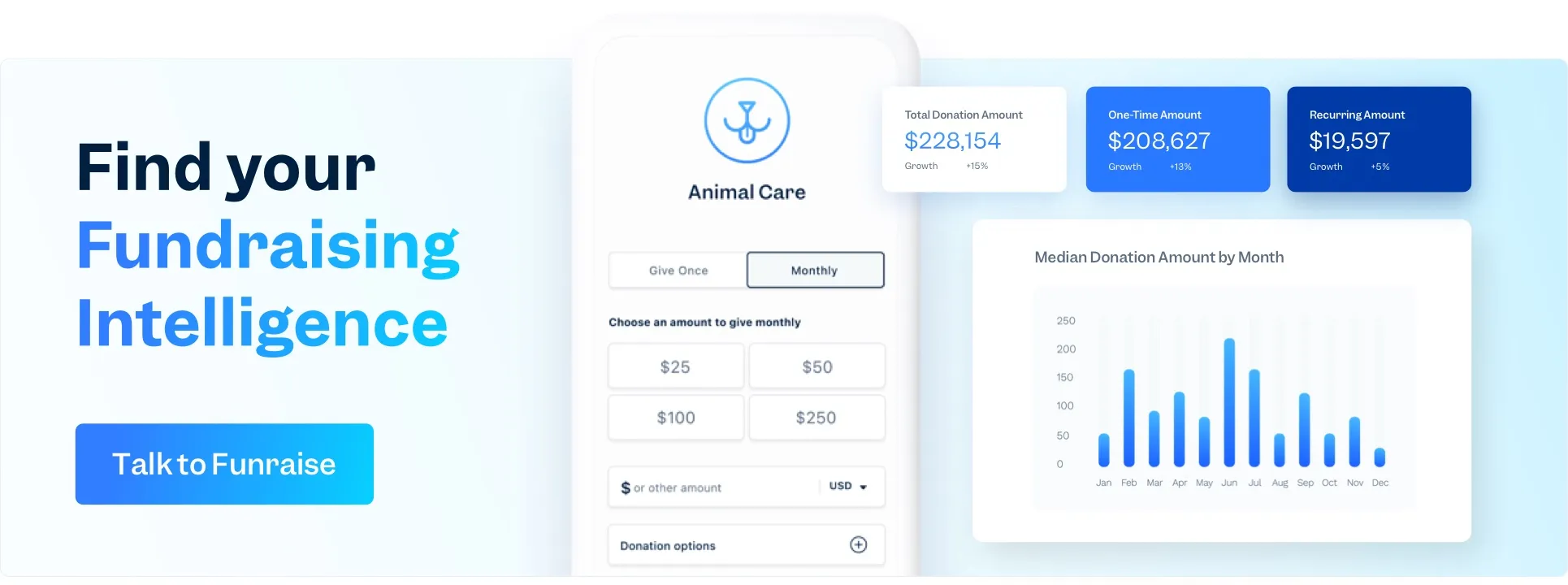
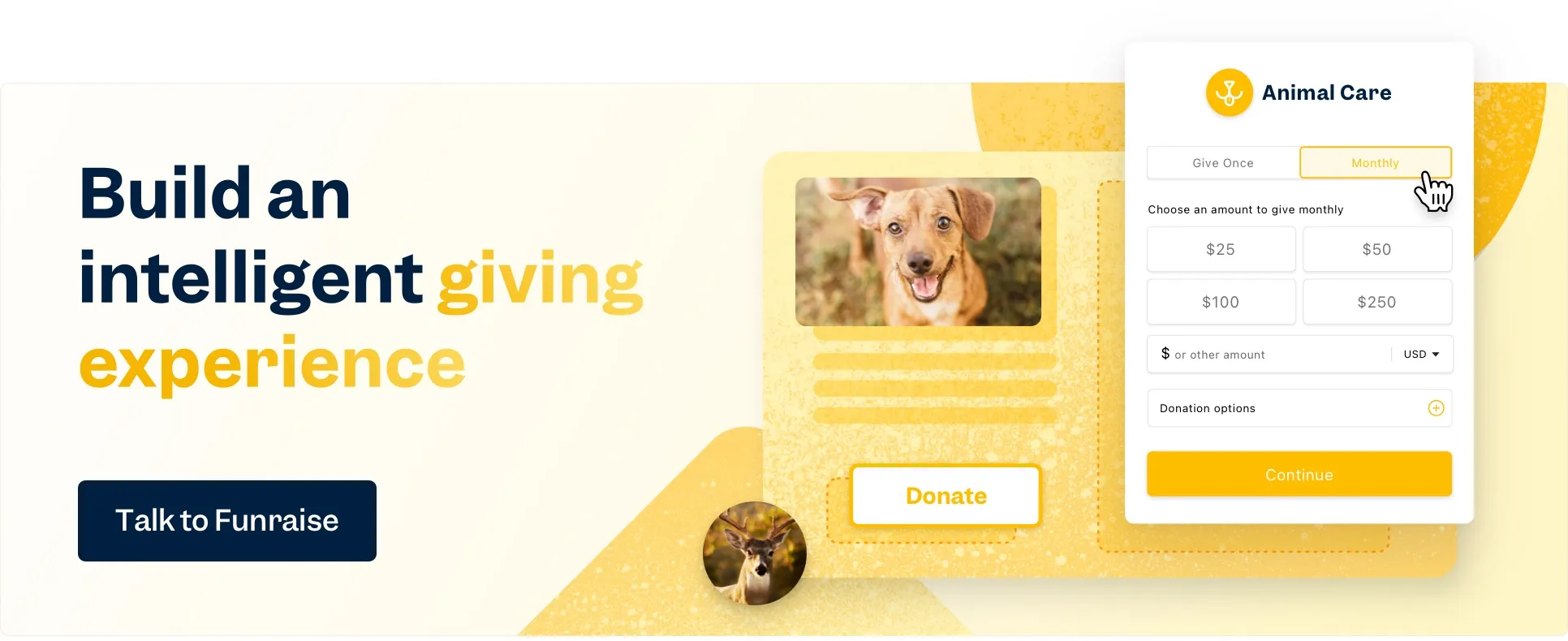
Mobile phone with donation form and donation charts floating around the phone.Mobile phone with donation form and donation charts floating around the phone.Woman looking at fundraising chart with button to book a call.Yellow shapes in background with donation form in front with stylized text, build an intelligence giving experience.Sparkling star.
Download
Sparkling star.
Start For Free
Sparkling star.Sparkling stars.
Blue shapes.Blue shapes.Blue shapes.

Cross-Presentation Takeaways

Across all five sessions, Justin reinforces several universal principles that apply to summer camps of all sizes:

1. Storytelling is your most powerful tool

Every strategy—from donor growth to event design—depends on clear, human stories. Summer camps have an abundance of these stories; they simply need to be told.

2. Technology amplifies, not replaces, relationships

Digital tools remove friction so you can focus on people, not processes.

3. Community is your greatest asset

Families, alumni, church partners, teens, and volunteers expand your reach more effectively than any marketing strategy.

4. Momentum beats intensity

Consistent, rhythm-driven communication outperforms last-minute pushes every time.

5. Small steps drive long-term growth

You don’t need to transform your fun run fundraising program overnight; you need to begin with intention and consistency.

How Funraise Helps Camps Implement These Strategies

Funraise gives camps the modern tools, guidance, and support you need to run effective, community-driven nonprofit fundraising for camps programs without feeling overwhelmed. Funraise helps camps:

Grow and diversify your donor base

  • Peer-to-peer fundraising tools
  • Easy campaign site creation
  • Social sharing and team fundraising features

Maximize value from existing donors

Run events that raise more and feel easier

  • Registration + fundraising in one platform
  • Dynamic thermometers to build momentum
  • Mobile giving and QR experiences

Automate repetitive tasks

  • Donor journeys
  • Thank-you automation
  • Scheduled stewardship sequences

Support from experts who understand nonprofits

Funraise’s team can't run your campaigns for you—but we will equip you with powerful tools, clear guidance, and responsive support from people who have spent their careers in nonprofit work. (Like Justin!)

Digital fundraising and expanded fundraising goals and deeper supporter relationships and The Future are all within your grasp. You can totally do it.

In this Article